
What Is Ménière’s Disease?
Ménière’s disease is a chronic inner ear disorder that causes sudden, unpredictable episodes of intense vertigo, tinnitus (ringing in the ears), fluctuating hearing loss, and a feeling of pressure or fullness in the ear.
The underlying mechanism is called endolymphatic hydrops — an abnormal buildup of fluid in the labyrinth, the fluid-filled chambers of the inner ear. When that fluid pressure becomes too great, it triggers an attack.
Attacks can last anywhere from 20 minutes to several hours. They can strike without warning. For many patients in Georgia, Ménière’s disease severely disrupts daily life — making it dangerous to drive, difficult to work, and exhausting to manage.
What Causes Ménière’s Disease?
The exact cause isn’t fully understood. Current research points to a combination of factors that may contribute to abnormal fluid regulation in the inner ear:
- Autoimmune responses that cause the body to attack inner ear tissue
- Viral infections that damage the structures responsible for fluid drainage
- Genetic factors that predispose certain individuals to the condition
- Structural or vascular abnormalities that affect fluid regulation
- Head or neck trauma — including whiplash — that disrupts the neurological systems governing inner ear function
That last point is critical. A growing body of clinical evidence suggests that upper cervical misalignment — particularly at the atlas (C1) — plays a direct role in the onset and severity of Ménière’s disease in many patients.
The Upper Cervical Spine and Inner Ear Function
Most Ménière’s patients are never told this: the top vertebra in your spine sits millimeters away from the structures governing inner ear drainage and neurological balance function.
The atlas (C1) and axis (C2) surround the brainstem at the base of the skull. This region controls critical functions including:
- Vestibular processing — how your brain interprets balance and spatial orientation
- Drainage of the eustachian tube and lymphatic pathways connected to the inner ear
- Blood flow through the vertebral arteries supplying the brainstem and cerebellum
- Autonomic nervous system regulation, which influences fluid balance throughout the body
When the atlas shifts out of alignment — even by a fraction of a millimeter — it can compress or irritate the brainstem, restrict proper drainage pathways, and interfere with the neurological signals that regulate inner ear pressure.
The result, for some patients, is exactly what Ménière’s disease looks like: fluid buildup, pressure, vertigo, tinnitus, and hearing changes.
How Upper Cervical Chiropractic of GA Approaches Ménière’s Disease
At Upper Cervical Chiropractic of GA, we don’t guess. Every Ménière’s patient goes through a thorough intake process designed to identify whether an upper cervical misalignment is contributing to their condition.
Step 1: Detailed Case History
We ask the questions most providers skip. When did your symptoms start? Did you experience any head, neck, or whiplash injury — even years before your diagnosis? Have you been in a car accident, had a significant fall, or played contact sports? The timeline between trauma and symptom onset is often longer than patients expect — sometimes years.
Step 2: Advanced Imaging
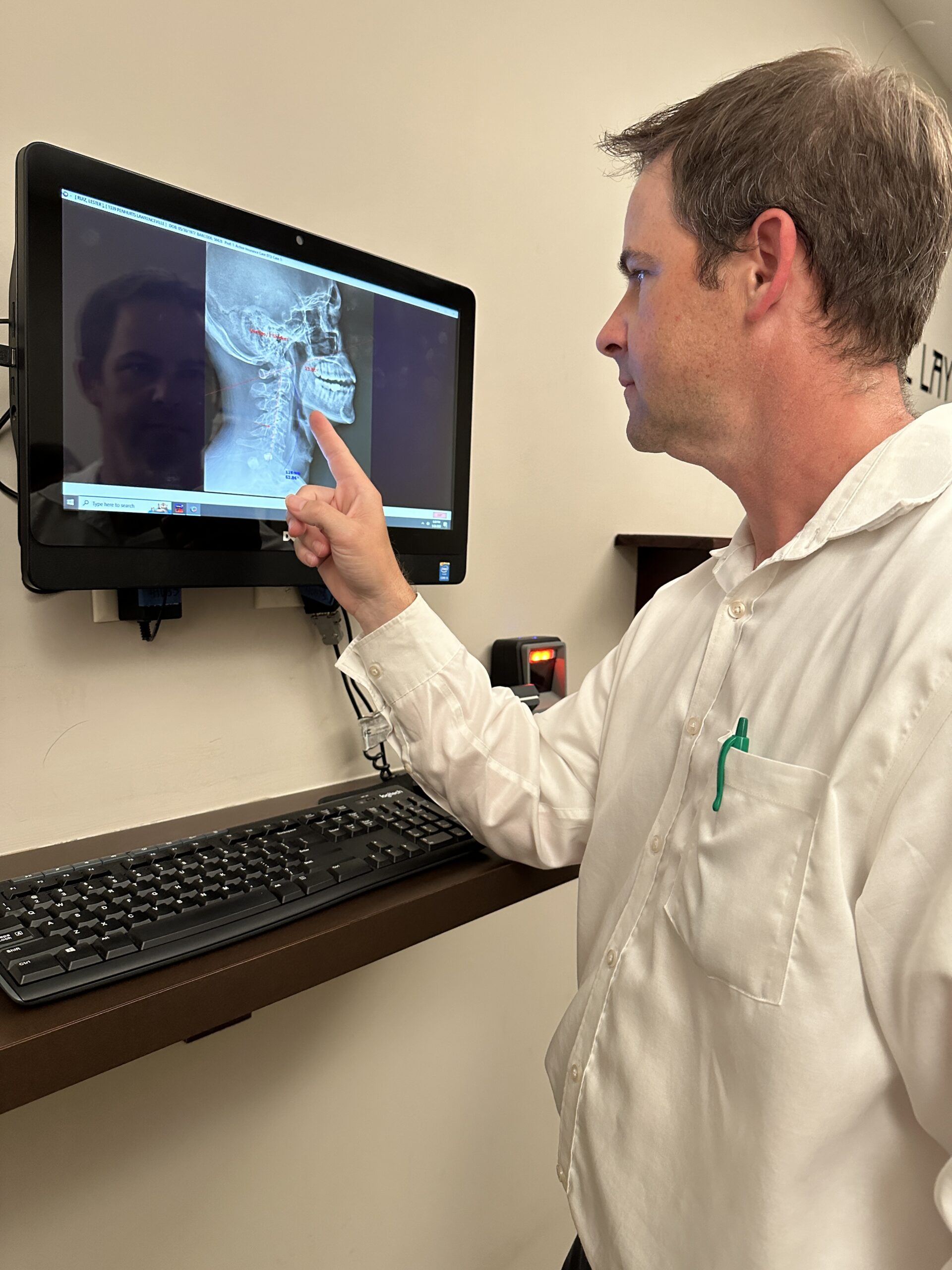
We take precise, three-dimensional X-rays of the upper cervical spine. These images allow us to measure the exact position of your C1 and C2 vertebrae — not just whether they’re “out,” but at what angle and in which direction. This level of specificity is what separates upper cervical care from standard chiropractic.
Step 3: A Precise, Gentle Correction
Upper cervical adjustments involve no twisting, cracking, or forceful manipulation. The correction is calculated specifically from your imaging and delivered with a light, targeted force. Many patients are surprised by how gentle it is.
Step 4: Monitoring and Holding the Correction
The goal isn’t to adjust you repeatedly. It’s to correct the misalignment and help your body hold it. Follow-up visits track your progress and re-image only when necessary. As the atlas holds its corrected position, fluid drainage pathways have the opportunity to normalize — and symptoms often follow.
Who Is a Good Candidate for Upper Cervical Care for Ménière’s?
You may be a strong candidate if:
- Your Ménière’s symptoms started after a head or neck injury — even one from years earlier
- You’ve been in a car accident or had significant whiplash
- Your symptoms are primarily on one side
- Standard medical treatment (medication, low-sodium diet) hasn’t fully controlled your episodes
- You experience neck pain, headaches, or migraines alongside your Ménière’s symptoms
- You want to address a possible root cause rather than manage symptoms indefinitely
Frequently Asked Questions: Ménière’s Disease and Upper Cervical Care in Georgia
Is upper cervical chiropractic a cure for Ménière’s disease?
No treatment cures Ménière’s disease. Upper cervical care aims to remove a structural cause of inner ear dysfunction — specifically, atlas misalignment that may be disrupting fluid drainage and neurological balance function. For patients where this is a contributing factor, results can be dramatic. For others, it may be one part of a broader management approach.
How is upper cervical care different from regular chiropractic for Ménière’s?
Upper cervical care is hyper-specific. It focuses exclusively on the top two vertebrae and uses precise imaging to calculate corrections. There’s no general spinal manipulation involved. The level of specificity matters significantly when the goal is to address inner ear drainage pathways and brainstem function.
How long before Ménière’s patients see results?
It varies. Some patients notice a reduction in attack frequency after their first few corrections. Others take longer, particularly if the misalignment has been present for many years. Your chiropractor will give you a realistic timeline after your evaluation.
Do you see Ménière’s patients from across Georgia?
Yes. Patients travel to Upper Cervical Chiropractic of GA from across the state — including Atlanta, Marietta, Alpharetta, and surrounding communities — specifically because of our focus on upper cervical care for vestibular conditions.
Can I continue my current Ménière’s treatment while pursuing upper cervical care?
Yes. Upper cervical care is non-invasive and works alongside other treatments. Continue any medications or dietary protocols your physician has recommended. Let your chiropractor know your full treatment picture during your consultation.
You Don’t Have to Just Manage It
Most Ménière’s patients are told there’s no cure and handed a list of things to avoid. Low-sodium diets. Caffeine restrictions. Medication to reduce fluid. These approaches manage symptoms. They don’t address why the fluid is building up in the first place.
If a misaligned atlas is disrupting your inner ear’s drainage and neurological function, the symptom management will never fully work — because the underlying problem hasn’t been corrected.
That’s what upper cervical care is designed to do.
Upper Cervical Chiropractic of GA has helped patients across Georgia reduce their Ménière’s episodes, regain their balance, and get back to living without the constant fear of the next attack.
Visit getwellga.com to schedule your consultation.